
Yacht
Brokerage
Refined
Strategic guidance for buyers and sellers who expect more.
View All Listings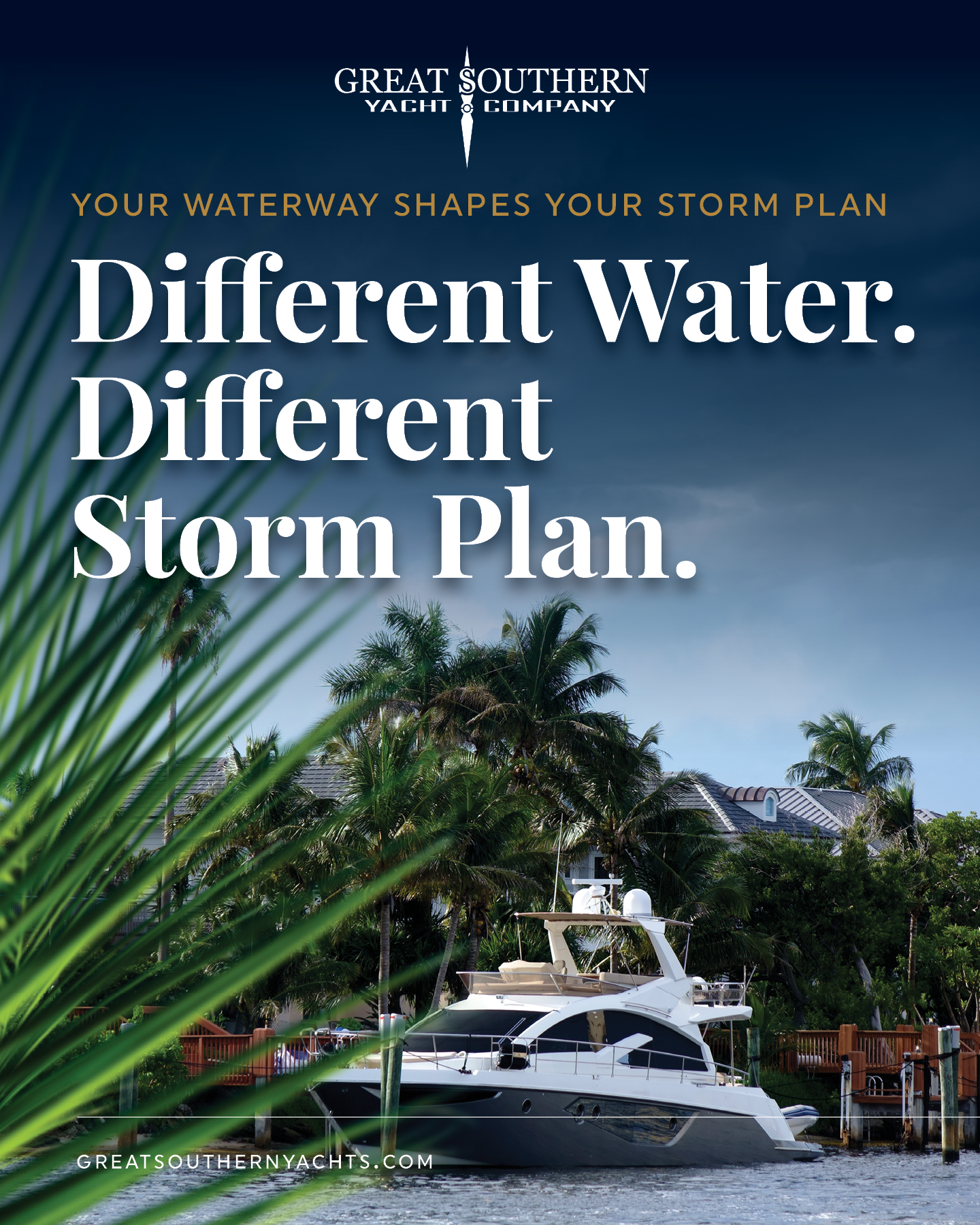
Panhandle slips and barrier bayous behave differently than South Florida canals in surge and fetch, so match your storage plan to local water dynamics rather than generic checklists. A trusted yacht consultant can help tailor the plan early
Storage Plans That Fit the Water: Panhandle Bayous vs. South Florida Canals
Hurricane season planning is not one-size-fits-all. Panhandle slips and barrier bayous behave differently than South Florida canals when it comes to surge, fetch, and wave action. If you base your storage plan on a generic checklist, you may miss the most important local risk. The smarter move is to match your strategy to how your specific waterway behaves—and to do that early, not days before a named storm.
As a fiduciary-first Florida yacht brokerage serving Destin, Miramar Beach, 30A, and South Florida, we help owners tailor storage and storm plans that reflect real conditions at the dock, not assumptions.
Why Local Water Dynamics Matter
- Surge: The rise of water above predicted tide. Basin shape and inlet constrictions can amplify surge differently in Pensacola Bay, Choctawhatchee Bay, or Biscayne Bay.
- Fetch: The distance wind blows over open water to build waves. Long, unobstructed reaches create larger waves—even inside “protected” bays.
- Current and set: Canals and bayous can funnel water, increasing line loads and chafe.
- Infrastructure: Fixed vs. floating docks, piling height, seawalls, and canal widths affect how your boat moves under load.
Panhandle Profiles: Barrier Bayous and Broad Bays
On Florida’s Emerald Coast, many slips sit inside barrier bayous, off broad waters like Choctawhatchee and Pensacola bays.
Key implications:
- Long fetch across bays can create significant wave energy even far from the Gulf.
- Narrow bayou mouths may delay drainage, prolonging high water after peak surge.
- Fixed docks and shorter pilings are common in older facilities; line management and vertical travel are critical.
- Upland tree cover can become debris; fender boards and chafe gear are essential.
Practical adjustments:
- Favor floating docks with pilings well above forecast surge. If on fixed docks, plan spiderweb line sets to high, opposing pilings to accommodate vertical rise.
- Use longer spring lines with heavy-duty chafe gear and lower stretch (e.g., double-braid) only where appropriate; integrate nylon stretch for shock absorption.
- Consider relocating upriver to hurricane holes (e.g., deeper, tree-sheltered bends with adequate width) when forecast track and timing allow.
- Prearrange yard haul-out with ground anchors and tie-down straps if your displacement and draft make it feasible.
South Florida Canals: Confinement, Overtopping, and Current
In Fort Lauderdale, Miami, and Palm Beach–area canals, exposure looks different.
Key implications:
- Limited fetch means smaller waves—but seawall overtopping and strong canal currents during surge are common.
- Narrow fairways increase collision risk with neighbor vessels and floating debris.
- Lift storage is prevalent; windage and lift specification matter more than line geometry.
Practical adjustments:
- Verify lift capacity, bolt-downs, and manufacturer’s storm procedures; secure bunks, cross-tie to pilings, and drop the vessel to lowest safe height if advised.
- If in-water, prioritize centered mooring to multiple pilings rather than short breast lines to seawalls; use fender boards to span cap rails.
- Inspect seawall condition and cap height relative to modeled surge; plan for lines that remain effective if caps are overtopped.
- Confirm bridge clearance and plan relocations to designated hurricane moorings on the New River or inland refuges well ahead of notice.
Build the Plan Around Your Slip, Not a Template
A Destin yacht broker and a South Florida yacht consultant will ask different first questions because the water behaves differently. Use this framework:
-
Map the forces
- Identify fetch exposure by direction and distance.
- Review local surge history and model outputs for your basin or canal.
- Note current set in peak tides and storm scenarios.
-
Audit the infrastructure
- Piling height above expected surge; condition and spacing.
- Fixed vs. floating dock behavior; gangway travel limits.
- Lift specs, anchoring, and maintenance records.
-
Engineer the mooring
- Line diameter and material matched to displacement.
- Redundant springs, chafe gear at every contact point, fender boards, and tide-friendly lead angles.
- Hardware: cleat backing, chocks, fairleads, and rub-rail protection.
-
Decide haul-out vs. in-water
- Yard availability, ground anchors, and tie-down capacity.
- Draft, beam, and logistics for transport if relocating cross-region.
-
Document and coordinate
- Insurance requirements and named-storm protocols.
- Marina rules, vendor access, and emergency contacts.
- A pre-staged kit: lines, chafe guards, fenders, boards, plugs, tape, tools, covers, and desiccants.
When to Relocate—and How Far
- Panhandle: A well-sheltered bayou or upriver bend can outperform exposed bay marinas. Plan the route, bridges, and depths; move early to avoid lockouts and traffic.
- South Florida: Designated hurricane moorings or upriver placements often reduce current and debris risk. Know bridge schedules and enforceable evacuation rules.
- Cross-region: If a major storm bullseyes your area, nationwide logistics may justify overland transport or seasonal repositioning. We coordinate carriers, permits, and receiving yards.
How a Fiduciary Yacht Consultant Helps
Great Southern Yacht Company operates as private yacht consultants—brand-agnostic and client-first. Our licensed brokers and USCG Master Captains provide:
- Localized risk assessment of your slip, bayou, or canal with clear recommendations.
- Marina and slippage advisory, including waitlist strategy and facility vetting in Destin, 30A, Miramar Beach, and South Florida.
- Custom mooring plans, line lists, and diagrams tailored to your vessel’s displacement and windage.
- Yard, surveyor, and transport coordination for haul-outs, tie-downs, or regional relocation.
- Contract-to-close guidance that builds storage and storm planning into your purchase or sale, so insurance compliance and operational readiness are set from day one.
Whether you’re evaluating where to keep a newly purchased sportfisher, optimizing a lift setup behind your South Florida home, or preparing a trawler in a Panhandle bayou, a thoughtful plan matched to local water dynamics protects both yacht and budget.
Ready to align your storage strategy with your waterway? Contact Great Southern Yacht Company—your trusted Destin and 30A yacht broker and Florida yacht brokerage—for a clear, tailored plan that stands up to real conditions.