
Yacht
Brokerage
Refined
Strategic guidance for buyers and sellers who expect more.
View All Listings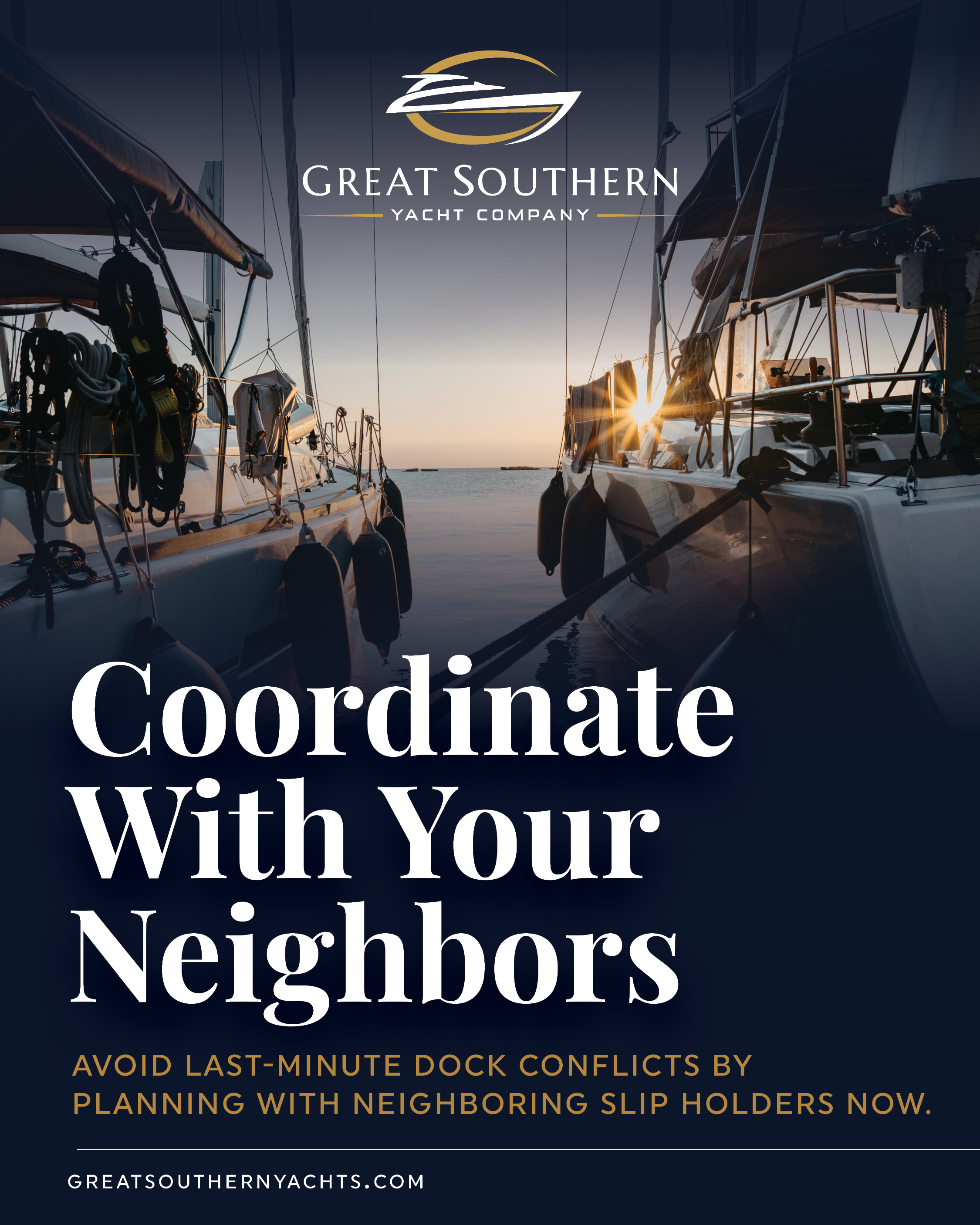
Confirm your slip neighbors’ plans now to avoid last-minute conflicts over lines, fenders, and access when dock teams are at capacity
Avoid Dockside Confusion: Why Slip Neighbor Communication Matters Before the Rush
Marinas along Florida’s Emerald Coast and South Florida fill quickly during peak weekends, storm events, holidays, and tournament seasons. When dock teams are at capacity and conditions change fast, the smallest miscommunication between slip neighbors can turn into real risk: crossed lines, missing fenders, blocked access, and avoidable damage.
A simple conversation now with the boats around you can prevent last-minute conflicts later.
At Great Southern Yacht Company, we see this dynamic play out regularly when helping clients coordinate marina placement, deliveries, and seasonal moves. The most problem-free experiences share one trait: proactive, respectful communication between slip neighbors before the dock gets busy.
Why Your Slip Neighbors’ Plans Matter
Whether you’re in Destin, Sandestin, Miramar Beach, 30A, South Florida, or another busy harbor, your boat does not live in a vacuum. Your safety and access are directly affected by the yachts around you.
Coordinating plans with your slip neighbors helps you avoid:
- Line conflicts – Shared pilings, cleats, or piling whips can create cross‑tied chaos if each owner rigs lines differently at the last minute.
- Fender gaps – Your neighbor’s absence or different fender strategy can leave exposed hull areas, especially in tight fairways or exposed docks.
- Blocked access – Dinghies, dock boxes, carts, hoses, and power cables can easily obstruct emergency egress or boarding when everyone is rushing.
- Overloaded dock staff – When a front is moving through or a holiday fleet arrives, dockhands may not have time to reconfigure everyone’s setup on demand.
- Misaligned expectations – One owner might assume the dock team will “handle it,” while the dock team expects owners to coordinate with each other.
Early, direct communication makes the environment safer, calmer, and fairer for everyone.
Start the Conversation Before Things Get Busy
A quick check-in today with your slip neighbors is far easier—and more productive—than a tense conversation during high winds or a holiday rush. A short, straightforward approach works best:
Key questions to ask your neighbors:
- “Are you planning to be aboard this weekend or away?”
- “Do you plan any arrivals or departures during the next front or tide cycle?”
- “How do you like to run your lines when conditions get rough?”
- “Are you comfortable if we hang shared fenders between the boats?”
- “If you’re away, who is your local contact if something needs attention?”
You are not asking to control their decisions; you are gathering information to plan your own boat’s safety and access responsibly.
Coordinate Lines, Fenders, and Clear Access
Once you know everyone’s general plans, move to specifics. Focus on three areas that cause the most problems when dock teams are stretched thin.
1. Agree on Line Layout
When boats share cleats or pilings, crossed or competing lines can create real strain during wind and tide.
Consider:
-
Shared cleats or pilings
Decide who uses which attachment points and how lines will be led to avoid chafing and bind. -
Spring lines
Coordinate fore and aft springs so both vessels have proper fore‑and‑aft control without trapping one another. -
Tidal swing and surge
In tidal regions or exposed marinas, review line length and elasticity; one owner running overly tight lines can affect the neighboring boat’s movement.
If your marina has a standard rigging diagram, use it as a neutral reference point.
2. Plan Fender Placement Together
Fenders are most effective when they’re placed with the neighboring boat’s shape and rub rail height in mind.
- Match fender height to the lower of the two rub rails so neither hull is exposed.
- Use shared “between-boat” fenders if both owners are comfortable, especially for tight beam-to-beam spacing.
- Confirm fender types and quantity for expected conditions—particularly before heavy weekend traffic, wakes, or an approaching front.
If your neighbor will be away, it may be appropriate—if agreed—to adjust their fenders slightly for both boats’ protection.
3. Keep Dock and Boarding Paths Clear
Access issues tend to appear all at once when marinas are busy.
Review:
- Boarding points – Confirm where each owner needs clear deck or dock space for safe boarding, especially at night or in rougher water.
- Shared utilities – Coordinate routes for shore power cables, water hoses, and pump‑out lines to avoid trip hazards and blocked hatches.
- Gear storage – Ensure dock boxes, coolers, carts, and toys don’t obstruct fire equipment, electrical panels, or emergency ladders.
Dock staff will appreciate not having to referee whose gear is in the way when the marina is full.
Plan for Weather, Holidays, and Absences
In Gulf Coast and South Florida marinas, high‑demand moments are predictable: holiday weekends, active storm patterns, and seasonal fishing or cruising events.
Before those dates:
-
Ask neighbors about travel plans
If one yacht will be unattended, confirm how their lines and fenders will be managed. -
Clarify “storm plan” expectations
Some owners want maximum lines and fenders deployed; others prefer quick‑release setups for a rapid departure. -
Exchange contact information
A simple text or call can resolve questions about chafing lines or shifted fenders before they become problems.
For larger yachts or more complex slip configurations, your yacht broker, captain, or a trusted local manager can help design and document a setup in advance so no one is improvising when the dock team is overwhelmed.
When to Involve the Marina and Your Professional Team
Most neighbor conversations resolve smoothly. If you encounter a disagreement that directly affects safety or access:
- Loop in the dockmaster or marina manager early, not during a squall or Saturday rush.
- Refer to marina rules for guidance on line use, dock storage, and access pathways.
- Leverage professional advice from a trusted Destin yacht broker, 30A yacht broker, or your captain for best‑practice rigging and protection strategies.
For Great Southern Yacht Company clients, discussions about slip placement, dock configuration, and marina selection are part of broader yacht ownership planning. Your slip strategy should support how you actually use—and protect—your boat.
Turn Neighbors into Allies, Not Adversaries
Confirming your slip neighbors’ plans now is not about micromanaging other owners. It is about:
- Protecting your investment
- Reducing stress when marinas are busiest
- Supporting dock teams operating at capacity
- Creating a respectful, collaborative dock culture
A five‑minute conversation can prevent damage, frustration, and rushed decisions when conditions tighten.
If you’re considering buying or selling a yacht in Florida or simply want guidance on marina selection, slip strategy, or logistics, Great Southern Yacht Company is here as your private yacht consulting partner. Contact our team to discuss your plans and navigate every aspect of ownership with clarity and confidence.