
Yacht
Brokerage
Refined
Strategic guidance for buyers and sellers who expect more.
View All Listings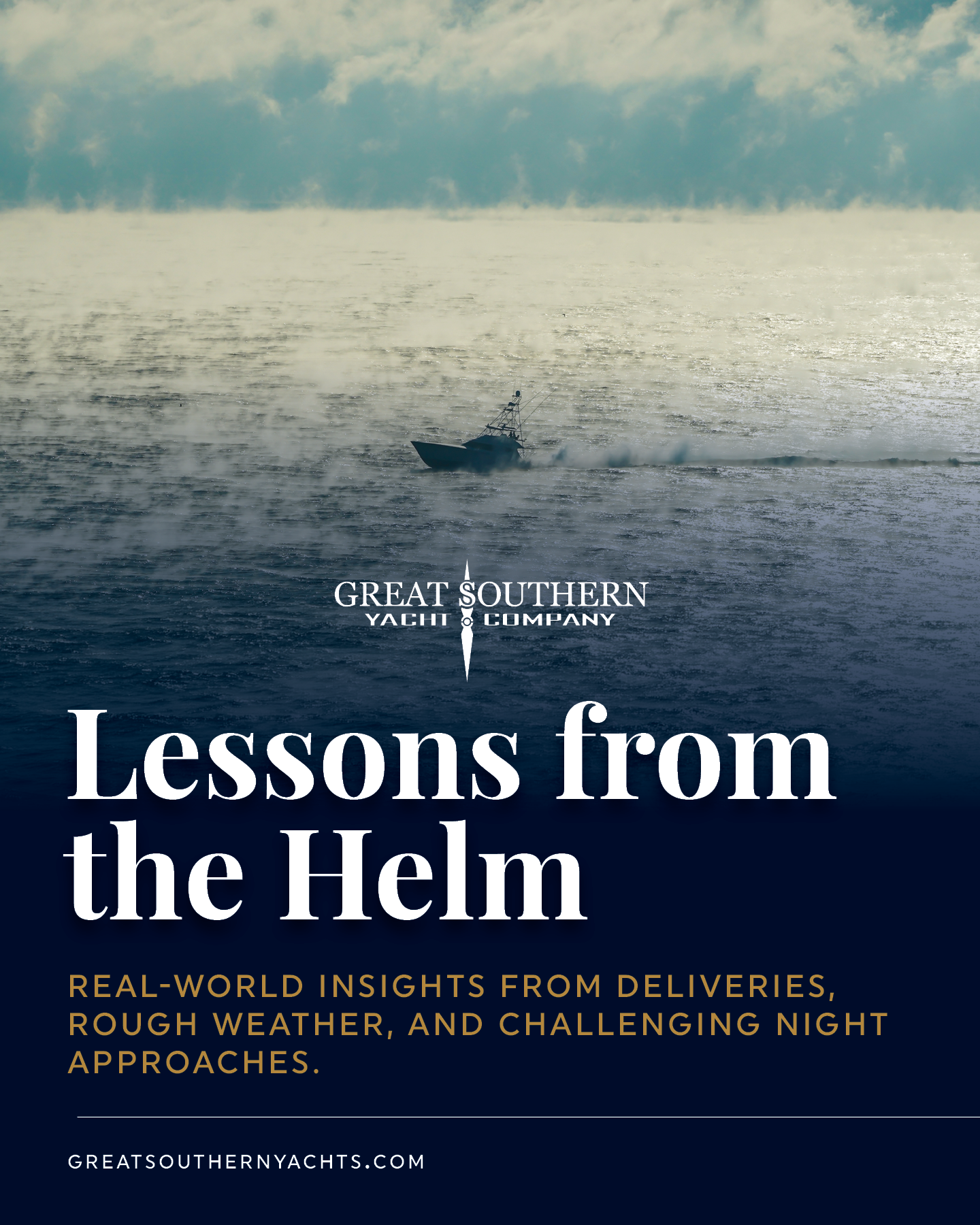
Stories from the helm: lessons learned during deliveries, rough weather, and night approaches
Stories from the Helm: Lessons From Deliveries, Rough Weather, and Night Approaches
On the Gulf Coast and in South Florida, conditions change quickly. Our brokers—licensed professionals with real sea time—routinely run boats between Destin, 30A, and Miami, coordinate cross-country shipments, and stand in for clients during surveys, sea trials, and deliveries. Along the way, we’ve collected practical lessons that help owners approach each passage with clarity and confidence.
Delivery Days: Preparation Wins Before You Cast Off
A recent Gulf run on a late-model cruiser offered a reminder: the delivery starts weeks before departure. The boat had been at a yard for routine service; a careful re-check revealed a loose hose clamp and a questionable alternator belt—minor issues at the dock, potential trip-enders at sea.
What worked:
- Build a written pre-departure checklist. Confirm every yard work order was closed, fluids and filters are fresh, bilge pumps tested, batteries load-tested, and steering inspected.
- Do the fuel math twice. Account for reserve, generator burn, detours, and sea state. For trawlers and sportfish alike, conservative range planning is your friend.
- Stage spares and tools. Belts, impellers, filters, clamps, fuses, and a basic electrical kit solve most underway surprises.
- Book marinas and slippage early. In peak season from Miramar Beach to Fort Lauderdale, shore power, depth, beam clearance, and current set at the slip matter as much as availability.
- Keep the itinerary flexible. A “must-arrive” mindset is where otherwise solid plans fail. Weather decides.
Whether you run your boat or hire a delivery captain, a fiduciary-first Florida yacht brokerage like Great Southern keeps the paperwork, insurance, and routing aligned with your goals—and your comfort level.
Weather Humbles Everyone: Manage Energy, Not Just Speed
A squall line crossing Florida Bay taught a useful truth: heavy-weather seamanship is about managing energy. We eased back, brought bow up, trimmed for control, and steered to soften the boat’s motion. The ride smoothed immediately, gear stayed secure, and fatigue never took hold.
A few habits we recommend:
- Choose wave period over wind speed. A short, steep chop will punish a planing hull more than a longer-period swell of the same height.
- Trim for control first, comfort second. Tabs up in head seas, avoid over-trimming stern drives, and hand-steer when quartering seas push the autopilot around.
- Establish a “ditch plan.” Before it’s needed, know where you can safely duck in—East Pass, Choctawhatchee Bay, St. Andrews, or a protected marina farther south.
- Communicate early. Call bridges, marinas, and—when appropriate—harbor pilots for local conditions. A five-minute call can save an hour of trial and error.
If the goal is to buy a yacht in Florida and enjoy family cruising, we help clients match hull type, range, and stabilization to the real conditions they’ll see—not the brochure day.
Night Approaches: Redundancy and Routines
A calm night approach into the Destin area once tested every assumption about “bright lights make things easier.” Shore glare washed out buoys; a lone unlit marker blended into background lights. The fix was simple seamanship.
Our standard night-playbook:
- Two independent positions at all times. Cross-check plotter with radar ranges and bearings; verify AIS targets against visual bearings. If one tool lies, the others tell the truth.
- Paper backup ready. Folded and marked at the helm for the last mile, not buried in a drawer.
- Define roles. One person eyes outside, one manages instruments, and one keeps a written log of fixes and engine hours.
- Slow is smooth. Safe speed preserves decision time and avoids wake issues in narrow channels.
- Smart light discipline. A brief, targeted spotlight scan is fine; avoid “driving by searchlight,” which flattens depth perception.
From Haulover to Lake Worth to Pass Cavallo, the principle holds: procedures beat heroics. As a Destin yacht broker and 30A yacht broker, we emphasize systems and training during sea trials so new owners build these habits from day one.
When to Run vs. When to Ship
Not every boat should make every trip by water. A wide-beam sportfisher moving from the Panhandle to the Northeast may be better on a lowboy with permits and escorts. Conversely, a capable trawler can turn the same distance into an enjoyable coastal passage.
Consider:
- Time and crew availability versus weather windows
- Insurance constraints (many policies specify distance offshore and crew requirements)
- Wear, hours, and post-trip maintenance
- Air draft and beam restrictions on inland routes
- Cost parity: trucking plus yard services can rival a multi-week run
We routinely price both options and manage the logistics so clients choose the path that aligns with budget, timeline, and risk tolerance.
Practical Owner Takeaways
- Build a passage plan with margins: distances, fuel, alternates, currents, and tides.
- Verify insurance coverage for deliveries and named operators.
- Set a watch schedule before leaving the dock; fatigue is the quiet failure mode.
- Carry the spares you’re most likely to need and know where they live.
- Reserve slips ahead, confirm shore power and depth, and plan for current in the slip.
- Debrief after arrival. Capture a punch list while it’s fresh and schedule fixes before the next run.
How These Lessons Shape Our Brokerage Work
Great Southern Yacht Company acts as a private yacht consultant—not a sales intermediary. We don’t carry new inventory or align with builders, which keeps our advice clear and client-first. During showings, surveys, sea trials, and deliveries nationwide, our brokers bring USCG Master Captain experience to real decisions: hull selection, equipment priorities, marina and slippage strategy, and safe routing.
- For buyers: We source nationally, analyze market value, and structure offers informed by actual operating considerations—so the boat fits your waters, crew, and plans.
- For sellers: We prepare listings with integrity, position pricing against real demand, and manage contract-to-close with transparency that keeps deals moving.
If you’re searching for a Florida yacht brokerage with deep route and delivery knowledge—whether you’re relocating a trawler to South Florida, evaluating a sportfishing purchase near 30A, or planning to “sell my yacht” with confidence—our team is ready to help.
Ready to talk through a purchase, sale, or delivery plan? Contact Great Southern Yacht Company for a straightforward conversation and a clear path forward.