
Yacht
Brokerage
Refined
Strategic guidance for buyers and sellers who expect more.
View All Listings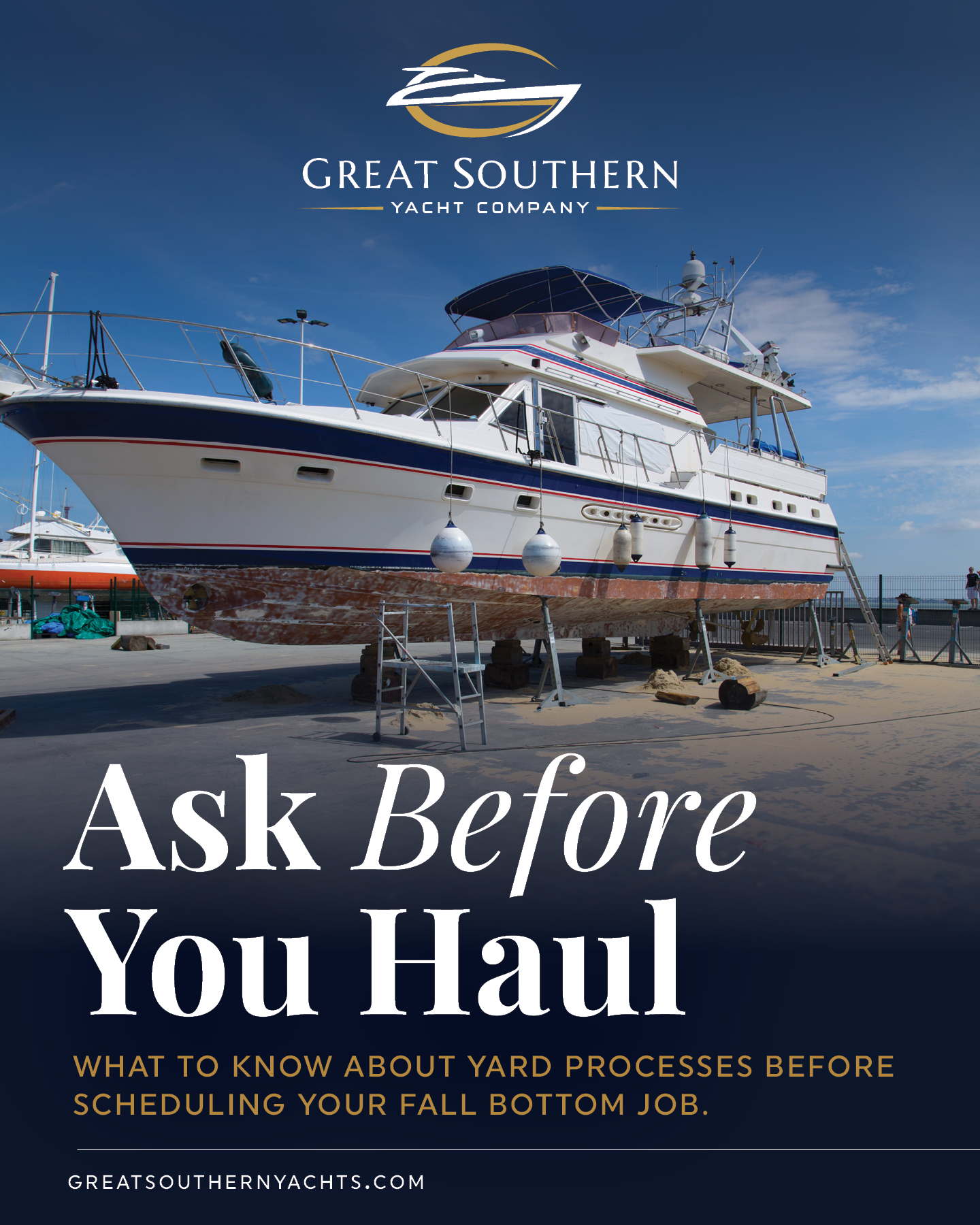
What to ask a yard before you book a fall bottom job: blast vs sand, water-based containment, cure windows, jack-stand placement plans, and documentation you’ll want for resale
What To Ask a Yard Before You Book a Fall Bottom Job
A bottom job is one of the most important maintenance items you’ll schedule as a yacht owner. Done well, it protects your investment, improves performance, and supports long-term resale value. Done poorly, it can create adhesion issues, moisture problems, and survey red flags later on.
Whether you keep your boat along Florida’s Emerald Coast, down in South Florida, or you haul out during seasonal cruising, it pays to ask the right questions before you book a fall bottom job.
Below are key topics to cover with any boatyard: blasting versus sanding, water-based containment, cure windows, jack-stand placement, and the documentation you’ll want to preserve for resale.
1. Blasting vs. Sanding: How Will You Take Me Back to a Sound Bottom?
Start by understanding exactly how the yard plans to prep your hull.
Ask these questions
-
Are you planning to blast or sand the bottom? Why?
-
Blasting (soda, garnet, or other media) is often the better choice when:
- You have multiple heavy paint layers
- You’re seeing flaking or blistering
- You’re switching paint types (e.g., hard to ablative, or vice versa)
-
Machine or hand sanding can be appropriate when:
- Existing paint is bonded well
- You’re simply refreshing the same type of antifouling
- You’re staying within manufacturer guidelines for a “maintenance coat”
-
Blasting (soda, garnet, or other media) is often the better choice when:
-
What media do you use for blasting, and how do you protect the laminate or gelcoat?
You want to avoid overly aggressive media or inexperienced operators that might:- Expose laminate
- Create uneven surfaces
- Open the door to future blistering
-
How will you address any existing blisters, previous repairs, or fairing?
The yard should have a clear plan to:- Grind and dry blisters (if present)
- Rebuild with compatible fairing compounds and barrier coats
- Maintain a fair hull shape, especially on performance hulls and sportfishing boats
For owners working with a Destin yacht broker or 30A yacht broker on a future sale, a properly prepped and documented bottom is something surveyors and buyers pay close attention to.
2. Water-Based Containment and Environmental Controls
Environmental standards are tightening nationwide, and many Florida yacht yards now use water-based containment and recovery systems when blasting or sanding.
Clarify the yard’s containment approach
-
What containment measures do you use during blasting or sanding?
Look for:- Shrink-wrap or tenting around the hull
- Tarps under the work area
- Vacuum-assisted sanders
- Filtration or capture systems for slurry and runoff
-
Do you use water-based blasting or slurry systems, and how is the waste managed?
The goal is to:- Keep old paint and debris out of the marina basin
- Prevent overspray onto nearby boats
- Comply with local, state, and federal regulations
-
Can you provide documentation of your environmental procedures if requested during a sale or survey?
This is a subtle but valuable point. As private yacht consultants, we routinely see surveyors note poor yard practices in their reports. Showing that your yacht was maintained at a reputable, environmentally responsible yard reflects positively on ownership and can be useful during resale discussions.
3. Cure Windows: Timing Matters More Than Many Owners Realize
Paint manufacturers specify “cure windows” — minimum and maximum times between coats and between final coat and splash. In a busy fall yard schedule, it’s easy for timing to slip if you’re not asking about it upfront.
Talk through the schedule before committing
-
Which antifouling and barrier coat systems are you using, and what are their cure windows?
Ask the yard to:- Identify specific products
- Reference the manufacturer’s technical data sheets
- Explain how weather and humidity affect timing
-
How do you schedule coats to stay within those windows?
You want to know:- How many coats they plan to apply
- How many days they expect your yacht to be on the hard
- What happens if weather disrupts the plan
-
What’s your policy if cure windows are missed?
If a coat waits too long before the next layer or launch, the yard should:- Abrade the surface as required
- Recoat if necessary
- Document any deviations
From a resale perspective, proper cure and application is often invisible until something goes wrong. When a surveyor uncovers adhesion failures, moisture readings, or premature paint breakdown, buyers and their brokers will ask who did the work and how it was handled.
4. Jack-Stand Placement and Block Plans: Protecting Hull and Structure
The way your yacht is blocked and supported on land matters — especially for larger cruisers, trawlers, and megayachts.
Ask for a clear jack-stand and blocking strategy
-
Do you follow manufacturer-provided blocking diagrams for my model?
Ideally, the yard will:- Use the builder’s recommended support points
- Avoid loading sensitive hull areas and stringers
- Keep stands off through-hulls, transducers, and lifting strakes
-
How many jack-stands will you use, and how are they chained or braced?
Safe practice usually includes:- Adequate stands along the hull
- Fore-and-aft blocking under keel or structural centerline
- Proper chaining and inspection during the yard stay
-
Will you adjust stands and repaint under the pads?
For a thorough bottom job:- The vessel should be re-positioned or stands moved at least once
- Paint should be applied under previous pad locations
If you ever plan to list your yacht with a Florida yacht brokerage or work with a broker to sell your yacht nationally, being able to show that the vessel was blocked correctly, without hull distortion or stress cracking, helps preserve buyer confidence.
5. Documentation You’ll Want for Future Resale
Well-organized records can materially improve the experience of selling your yacht and passing survey scrutiny. Before the yard starts, discuss how they’ll document the project.
Request specific records
-
Detailed invoice and work order showing:
- Yard name and location
- Dates of haul-out and re-launch
- Description of prep (blast vs sand, spot repair, barrier coat, etc.)
- Brand, product names, and number of coats applied
- Any blister repairs or structural findings
-
Photographs of key stages, including:
- Hull condition after blast or sanding
- Any blisters or repairs before and after
- Application of barrier coats and antifouling
- Jack-stand and blocking configuration
-
Manufacturer product sheets or spec summaries for:
- Barrier coat systems
- Antifouling paints
- Any fairing or epoxy products used
-
Environmental and compliance notes, if available:
- Confirmation of water-based containment or vacuum sanding
- Waste disposal practices
These records become part of the vessel’s story. When we represent clients as a luxury yacht broker or buyer’s agent, thorough documentation of bottom work is often the difference between a smooth survey and a prolonged renegotiation.
Bringing It All Together
Before you commit to a fall bottom job, take the time to interview the yard just as you would a broker, captain, or surveyor. Clarify how they’ll prep the hull, manage containment, respect cure windows, support the boat on the hard, and document the entire process.
If you’d like a second opinion on a yard’s proposal, paint system, or haul-out plan — or you’re thinking ahead to how this work will impact resale in the Florida or national market — Great Southern Yacht Company is here as your private yacht consultant.
Contact our team to discuss your vessel, your cruising plans, and how to protect both your yacht and its long-term value.