
Yacht
Brokerage
Refined
Strategic guidance for buyers and sellers who expect more.
View All Listings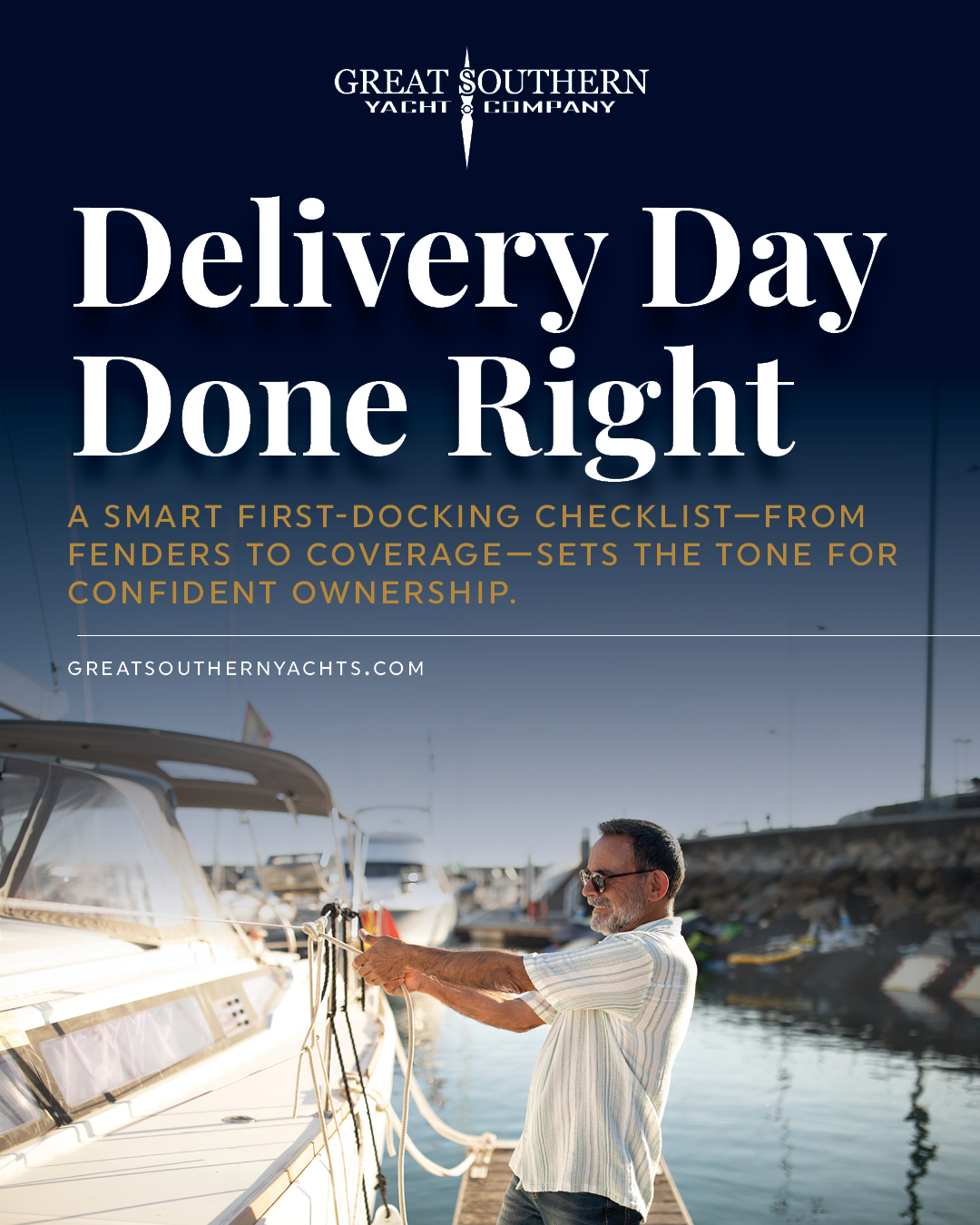
Buyer’s checklist for first docking on delivery day, from fenders to temporary insurance
Buyer’s Checklist for Your First Docking on Delivery Day: From Fenders to Temporary Insurance
Delivery day is exciting—and busy. A calm, methodical plan for your first docking protects your new investment, your crew, and your confidence. Use this checklist to prepare for that first tie-up, whether your vessel is arriving in Destin, Sandestin, Miramar Beach, 30A, South Florida, or a marina nationwide.
Pre‑delivery essentials to confirm before you cast off
-
Insurance binder in hand
- Ensure your temporary insurance is active at transfer of ownership (time/date on the binder).
- Verify navigation limits, named operators, liability limits, towing/salvage, fuel spill coverage, storm haul‑out, and tender coverage if applicable.
- Add the marina and lender as additional insureds when required.
-
Documentation and registration
- USCG Documentation or state registration application and temporary numbers ready to display as required.
- Bill of Sale, proof of ownership, paid‑in‑full or lender letter, and crew/passenger list.
-
Slip assignment and approach details
- Written slip number, dimensions (length, beam, depth), and approach route.
- Power pedestal specs (30A/50A/100A; single vs. three‑phase), water connection, and pump‑out availability.
-
Weather and tide
- Check wind, current, tide range, and marina traffic patterns. If conditions are unfavorable, delay or request docking assistance.
Your docking kit: the gear you’ll want ready
- Fenders: at least 4–6, sized for your LOA; rigged at the beam and quarter. Add fender boards if pilings are rough or widely spaced.
- Dock lines: bow, stern, and two springs minimum; correct diameter and length; chafe gear for sharp rub points.
- Boat hook, heaving line, and spare line coils.
- Gloves and PFDs for all deck crew; closed‑toe shoes.
- Shore power cords and adapters (30A/50A/100A), plus extra length. ELCI/GFCI compatibility check.
- Potable water hose with pressure reducer and inline filter; hose gaskets.
- Basic tools: knife, multitool, adjustable wrench, tape, spare shackles, electrical tester.
- Oil‑absorbent pads, rags, and a small spill kit for clean, safe bilge and dock handling.
Approach planning and crew briefing
-
Assign roles
- Helm: conning, speed control, and communication.
- Line handlers: bow, stern, and springs; confirm which cleats they’ll use first.
- Spotter: watches clearances, wind set, and other traffic.
-
Communication
- Hail the dockmaster on VHF (typically 16/68/71/72 as posted) for slip confirmation and docking side.
- Use clear, simple commands on board; hand signals if wind or engines drown voices.
-
Vessel readiness
- Test bow/stern thrusters, joystick, and engines in neutral before final approach.
- Fenders and lines pre‑rigged on the landing side; keep a backup set rigged opposite in case of last‑minute changes.
- Anchor ready to deploy if propulsion or control issues arise.
-
Speed and angle
- Plan to approach at the minimum speed that maintains steerage, typically into wind/current when possible.
- Set up for a controlled stop using spring lines, not throttle bursts.
The first‑docking sequence
- Pause outside the fairway to brief one last time and confirm wind set.
- Enter at idle; keep turns wide and deliberate; watch for prop walk in reverse.
- Bring the boat parallel with slight angle into the slip or face dock; engage neutral often.
- Place the first spring line from the midship cleat to arrest forward/aft movement.
- Secure bow and stern lines; adjust to center the boat in the slip.
- Fine‑tune with springs to control fore‑and‑aft and keep you off the dock under changing wind/current.
- Adjust fenders so they carry load, not the lines; add chafe gear where necessary.
- Engine neutral, then shut down after all lines are set and verified.
Pro tip: Never jump to the dock. Step carefully when the boat is stationary and secure, or pass lines to dock staff with a boat hook.
After you’re secure: systems, safety, and shore services
-
Shore power
- Confirm pedestal breaker off, connect cord, then power on at pedestal and onboard. Check for correct voltage and load; verify chargers/ELCI aren’t tripping.
-
Water and waste
- Connect potable water with reducer; inspect for leaks. Locate pump‑out procedures if needed.
-
Systems check
- Bilge dry, seacocks in known positions, engines/generator temps normal, no alarms.
- HVAC and refrigeration online; confirm carbon monoxide detectors and high‑water alarms operational.
-
Line tuning for tides
- On the Emerald Coast and South Florida, adjust for local tidal range and wakes. Consider snubbers in high‑wake areas.
Insurance and paperwork details that matter on day one
-
Temporary insurance specifics
- Confirm the effective time matches the closing. Carry the binder electronically and in print.
- Verify navigation territory (e.g., Gulf Coast, South Florida, Bahamas) and any captain/crew requirements.
- Ensure salvage is separate from liability; review fuel spill limits; note any layup or named operator clauses.
-
Documentation and access
- Keep copies of USCG Documentation or temporary state registration visible as required.
- Provide the marina with proof of insurance, vessel information, and emergency contact details.
- If using a delivery captain, carry the captain’s credentials and any required COI.
Marina fit and logistics: local notes for Destin, 30A, and South Florida
- Slip fit: confirm beam and fairway width for sportfishers with big towers or wide‑body cruisers.
- Depth: watch shifting sands along the Emerald Coast; check tides for trawlers with deeper draft.
- Power: ensure you have correct cord sets and adapters for 30A/50A/100A pedestals common in South Florida.
- Exposure: wakes and crosswinds at inlet‑adjacent marinas may require additional fenders and spring lines.
- Policies: review transient vs. long‑term agreements, hurricane plans, and liveaboard rules before arrival.
When to bring in a professional
New to the boat, or docking in tight quarters? Hiring a local captain or requesting dockhands reduces risk and stress. As a Florida yacht brokerage with USCG‑licensed brokers, we routinely coordinate on‑board support for first docking, including hands‑on guidance and crew briefing.
How Great Southern Yacht Company supports delivery day
As private yacht consultants and fiduciary‑first advisors, our team:
- Coordinates marina placement and slip selection suited to your vessel and cruising plans.
- Oversees surveys, sea trials, and contract‑to‑close details, including documentation and temporary insurance timing.
- Manages logistics for regional or cross‑country deliveries, including transport, route planning, and arrival support.
- Provides on‑site representation in Destin, Sandestin, Miramar Beach, 30A, South Florida, and nationwide to help you dock confidently on day one.
Ready for expert, calm guidance from a Destin yacht broker and trusted Florida yacht brokerage? Contact Great Southern Yacht Company to discuss buyer representation and delivery‑day support.