
Yacht
Brokerage
Refined
Strategic guidance for buyers and sellers who expect more.
View All Listings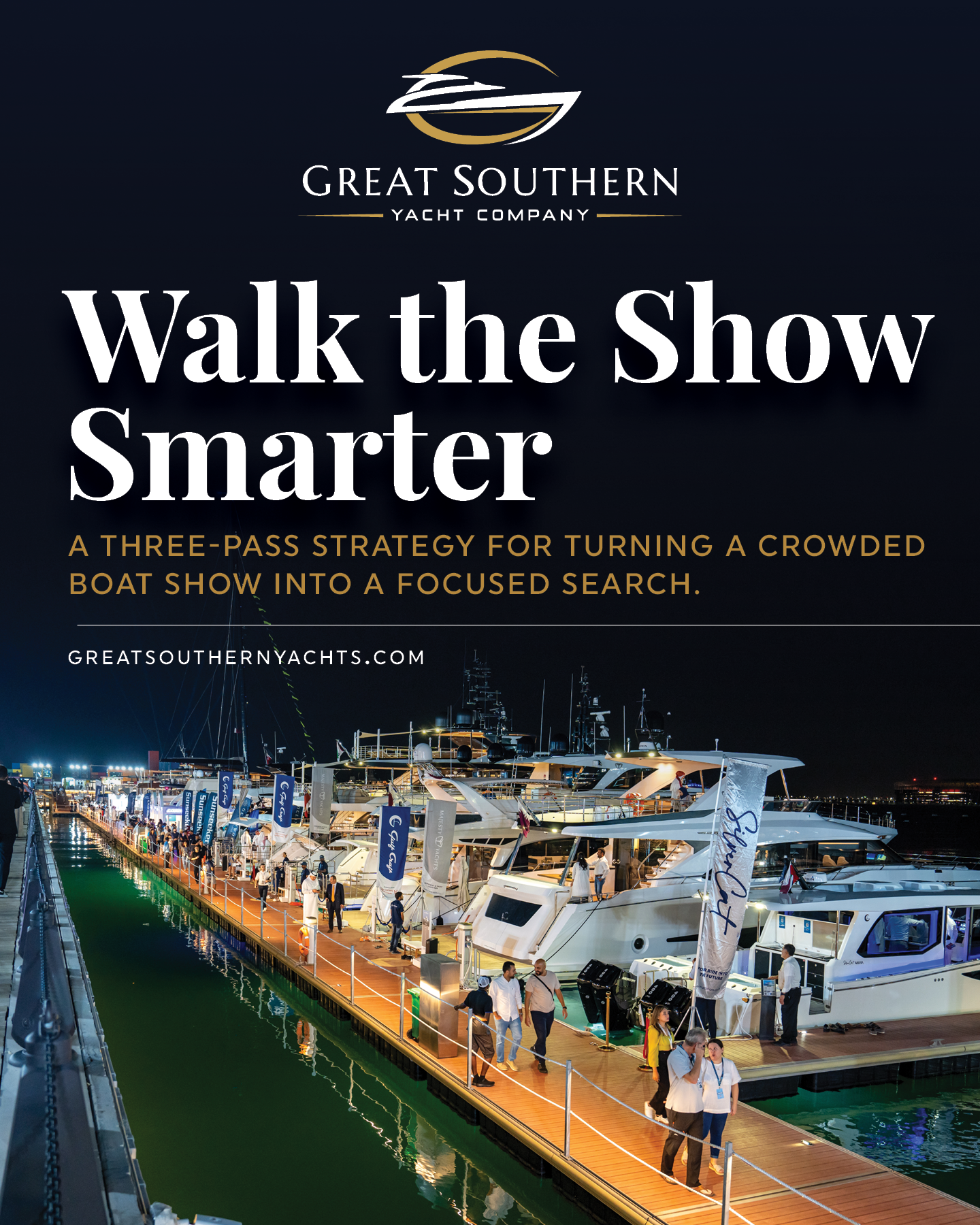
A boat show game plan that wins: GSY’s three-pass method for filtering the floor—initial scan, focused shortlist, deep-dive questions that surface hidden value
A Boat Show Game Plan That Wins: Great Southern’s Three-Pass Method
A major boat show can be overwhelming. Dozens of brands, endless layouts, sharp sales pitches, and a limited amount of time on the docks. Without a plan, it’s easy to walk away exhausted and no closer to the right yacht.
At Great Southern Yacht Company, our brokers approach boat shows as private yacht consultants, not shoppers. We use a simple, disciplined three-pass method that helps clients filter the floor efficiently, compare options objectively, and uncover hidden value that’s not obvious from the glossy brochures.
Whether you’re visiting a show in Fort Lauderdale, Miami, or closer to home along Florida’s Emerald Coast, this framework will help you think like a professional buyer’s broker.
Before You Go: Define Your “Mission Profile”
A boat show should refine your choices, not create confusion. Before you step onto the dock, get clear on:
-
How you actually plan to use the boat
- Weekend runs to Crab Island vs. long-range cruising
- Family sandbar days vs. serious offshore fishing
- Liveaboard comfort vs. occasional seasonal use
-
Typical crew and guest count
- Who needs real sleeping berths vs. “can crash on the couch”
-
Home waters and storage
- Depth restrictions, bridge clearances, marina slip size
-
Operating comfort zone
- Are you comfortable with pods, bow thrusters, or joystick controls?
- Will you run the boat yourself or use a captain?
Write this down. It becomes your filter for every conversation at the show and will make each pass more productive.
Pass One: The Initial Scan – Eliminate Quickly, Don’t Decide
The first pass is all about orientation and fast disqualification, not falling in love.
Objectives of the Initial Scan
- Cover a broad section of the show without getting stuck
- Confirm or challenge your assumptions about size, style, and layout
- Quickly rule out what clearly doesn’t fit your mission profile
How to Work the First Pass
-
Walk the docks with a wide lens
- Hit the categories that match your goals: sportfish, flybridge cruisers, express boats, trawlers, center consoles, sailing yachts.
- Don’t queue for long lines yet unless a specific model is a must-see.
-
Use a simple “yes / no / maybe” filter
- “Yes” = strong potential fit; note builder, model, and location.
- “No” = clear mismatch (layout, style, price range, operating complexity).
- “Maybe” = leave open; don’t overthink on pass one.
-
Spend 5 minutes per boat max
- Step aboard, walk the key spaces (cockpit, salon, galley, master, helm).
- Ask only basic questions: length, power, fuel burn range, rough pricing.
-
Document, don’t debate
- Snap a quick photo of the builder plaque and helm.
- Jot one or two bullets: “Great salon, tight engine room” or “Beautiful, but too much draft for Destin bay”.
At the end of pass one, you should have a short list of serious contenders and a clearer sense of what doesn’t work for you.
Pass Two: The Focused Shortlist – Compare Like a Professional
Pass two is where you slow down and become deliberate. Your goal is to build a focused comparison set of boats that genuinely fit your needs and budget.
Narrowing to a Real Shortlist
From your “yes” and “maybe” notes, choose:
- 3–5 primary contenders in your preferred category and size range
- 1–2 wild cards that surprised you on pass one
Then revisit each of these with a more critical eye.
What to Evaluate on Pass Two
Think in terms of ownership reality, not boat-show sparkle:
-
Layout and livability
- Is the galley where you’ll actually want it (up vs. down)?
- Can your typical crew move comfortably without bottlenecks?
- Are berths and heads usable for real adults on longer trips?
-
Helm and handling
- Sightlines at slow speed and on plane
- Access to controls, visibility of electronics, ergonomics of the helm seat
- Docking aids, joystick systems, or bow/stern thrusters
-
Engine room and systems access
- Can you realistically service filters, belts, seacocks?
- Is wiring tidy and labeled? Are through-hulls accessible?
- Ventilation and lighting in machinery spaces
-
Build quality indicators
- Fit and finish in hidden areas (inside lockers, under cushions)
- Hardware quality, latches, hinges, and deck fittings
- Glasswork, nonskid, and hatch rigidity
Capture specific likes and concerns for each contender. This is where an experienced Destin or 30A yacht broker would be quietly building a mental pros/cons list for you.
Pass Three: Deep-Dive Questions That Surface Hidden Value
By pass three, you’re no longer a “visitor”; you’re acting like a buyer with a checklist. The goal is to ask the kind of questions that reveal true cost, long-term suitability, and potential resale strength.
Here are categories and sample questions our brokers routinely use with clients at major shows:
1. Usage, Range, and Operating Cost
- What is the realistic cruising speed and fuel burn, fully loaded?
- With standard tankage, what is the comfortable range with reserve?
- How does this model typically perform in Gulf of Mexico chop or afternoon South Florida seabreezes?
- For a buyer based in Destin or Miramar Beach, what are the typical annual running and maintenance costs?
2. Ownership and Service Practicalities
- Which engines and generators are most common on this model, and what does service support look like in Northwest Florida and South Florida?
- Are there any known service bottlenecks (specialized components, proprietary systems)?
- For a buyer bringing this yacht into a local marina or 30A area dock, what are the key size, draft, and shore-power considerations?
3. Build History and Known Patterns
- How long has this model or hull design been in production?
- Are there any recurring survey findings that experienced brokers see with this series as it ages?
- What have you seen in terms of resale strength over 5–10 years?
4. Real-World Use Cases
- Can you share how typical owners use this boat: coastal cruising, Bahamas runs, sportfishing, liveaboard?
- What have existing owners most often upgraded from or moved into after this model?
Answers here help you understand not just the boat’s capabilities, but whether it fits your ownership trajectory.
How a Fiduciary-First Broker Amplifies the Three-Pass Method
You can absolutely use this framework on your own. But working alongside a brand-agnostic, fiduciary yacht broker changes the quality of information you receive:
- We’re not tied to any manufacturer or new-boat quotas.
- We can translate show-floor impressions into concrete pre-owned opportunities that fit your budget.
- We understand nationwide availability, pricing trends, and survey histories on specific models.
- We factor in marina placement, draft constraints, and delivery logistics from South Florida or other regions back to the Emerald Coast.
Most important, a good broker will tell you what they would tell a close friend: everything known, everything discoverable, and everything experience suggests.
Turn Your Boat Show Into a Launchpad, Not a One-Off Event
A well-run boat show visit should give you:
- A clear short list of candidate yachts
- A realistic sense of budget and operating costs
- Confidence about next steps: pre-owned sourcing, offers, surveys, and delivery
If you’d like to walk an upcoming show with a trusted advisor—or turn your boat show discoveries into a disciplined pre-owned search—Great Southern Yacht Company is here to help.
Contact our team to discuss your plans, and let’s design a yacht ownership path that fits the way you really want to be on the water.