
Yacht
Brokerage
Refined
Strategic guidance for buyers and sellers who expect more.
View All Listings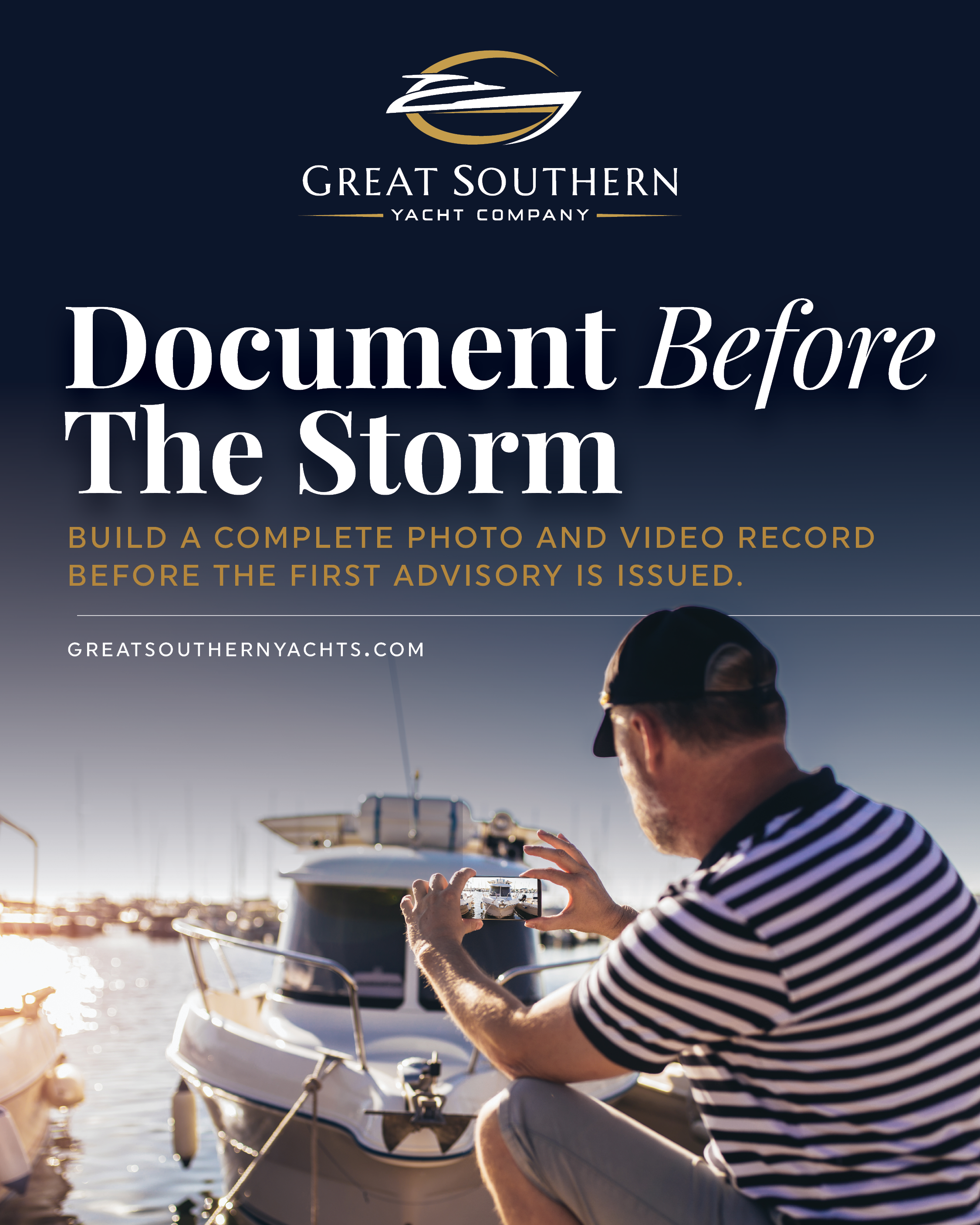
Create a photo-and-video protocol owners can complete in 30 minutes this month: engine-room walkthrough, hull and topsides, electronics screenshots, serial numbers, and a timestamped dockside panorama for post-storm comparisons
A 30-Minute Photo & Video Checklist Every Yacht Owner Should Complete This Month
Yacht owners along Florida’s Emerald Coast and South Florida live with an unavoidable reality: weather changes fast, and serious storms are not a question of if but when. Clear, organized documentation of your yacht is one of the simplest ways to protect your investment, support insurance claims, and give your broker accurate information if you decide to sell.
This 30-minute photo-and-video protocol is designed for real-world use—something you can complete dockside in one session and repeat a few times a year, or whenever a storm system is approaching. All you need is a smartphone and a few minutes of focus.
Before You Start: How to Set Up Your Quick Documentation Session
You’ll work in five short segments:
- Engine room walkthrough (video)
- Hull and topsides (photos + short clips)
- Helm and electronics screenshots
- Serial numbers and key documentation
- Timestamped dockside panorama for post-storm comparisons
Recommended tools:
- Fully charged smartphone or tablet
- Flashlight or headlamp (for engine room)
- Notepad app or notes in your phone
- Clean rag to quickly wipe salt spray from lenses and displays
Create a dedicated album on your phone or cloud storage labeled:
“[Boat Name] – Condition Log – [Month Year]”
Upload everything there immediately after you finish.
1. Engine Room Walkthrough (8–10 minutes)
The engine room is where insurers, surveyors, and qualified buyers focus first. A clear, methodical walkthrough gives you a “snapshot in time” of your machinery and systems.
How to record it
- Use video in landscape mode.
- Turn on your flashlight for darker corners.
- Speak as you go—your narration becomes a useful record.
Shot sequence
-
Entry shot (10–15 seconds)
- Start at the engine room entrance.
-
Say the date, location, and boat name:
“July 2026, Destin, FL – engine room condition walkthrough for M/Y Example.”
-
Main engines (2–3 minutes)
- Port engine: pan slowly from front to back, then top to bilge.
- Starboard engine: repeat the same pattern.
-
Capture:
- Hoses, clamps, and belts
- Engine mounts and stringers
- Visible fuel lines and filters
- Bilge condition beneath each engine
-
Generators and major equipment (2–3 minutes)
-
Generator(s): full framing plus close-ups of:
- Labels and serial plates
- Fuel filters and raw water strainers
-
Other equipment:
- Watermakers
- Inverters/chargers
- HVAC units visible in the space
-
Generator(s): full framing plus close-ups of:
-
Through-hulls, seacocks, and strainers (2–3 minutes)
- Do a slow pass along each side of the hull interior.
-
Capture:
- Open/closed status of seacocks
- Hose condition and double clamps
- Any signs of corrosion or staining
-
Final overview (30 seconds)
- Zoom out and do one last slow pan of the entire engine room.
-
Narrate any known upcoming service:
“Port engine cooling system service due in October, after 100 more hours.”
This single video will be invaluable after a storm, during a survey, or when a Destin or 30A yacht broker is evaluating your vessel for sale.
2. Hull, Topsides, and Deck (8–10 minutes)
Next, capture the exterior—both for insurance purposes and for future listing photos.
Hull and waterline
- Walk the dock from bow to stern on each side.
-
Take:
- 4–6 wide shots per side (bow quarter, midship, stern quarter).
-
Close-ups of:
- Any existing scuffs or gelcoat repairs
- Thru-hulls, transducers, and exhaust outlets
- Include the name and hailing port on the transom.
Topsides and deck
-
From the dock:
- Photograph rub rails, cleats, stanchions, and rail bases.
-
On deck:
- 2–3 wide shots from the bow looking aft.
- 2–3 from the cockpit or aft deck looking forward.
-
Close-ups of:
- Windlass and ground tackle
- Deck hardware and hatches
- Canvas, isinglass, and bimini structure
If you later ask a Florida yacht broker to “sell my yacht,” these photos become an immediate reference point for condition and maintenance.
3. Helm and Electronics Screenshots (5–7 minutes)
Modern yachts and sportfishing boats rely heavily on integrated electronics. Documenting your screens today makes it easy to spot changes or demonstrate functionality.
Photos and video at the helm
- Take a wide shot of the entire helm.
-
Individual close-ups of:
- Multifunction displays (chart, sonar, radar)
- Autopilot
- Engine control displays
- Analog gauges, throttles, and joystick controls
On-screen screenshots
For each main display, capture:
-
Chartplotter
- Current position and scale
- Any custom routes or waypoints visible
-
Sounder/sonar
- Depth readings and gain settings
-
Engine pages
- Current hours on each engine and generator
- Any active alarms or codes
Use your phone’s photo and built-in screenshot capabilities if your electronics allow direct export; otherwise, simply photograph the screens clearly.
These records are useful during pre-purchase sea trial planning, insurance renewals, and when a luxury yacht broker is evaluating your equipment list and value.
4. Serial Numbers and Key Records (5 minutes)
Serial numbers and data plates are often the first thing insurers and surveyors request after an incident.
Capture the following:
- Engines: serial plates on each main engine
- Generator(s): serial and kilowatt rating
-
Major systems:
- Watermaker
- Stabilizers
- Bow/stern thrusters
- Davit or lift
-
Tenders and outboards:
- HIN (Hull Identification Number)
- Outboard serial numbers
Take clear, close-up photos and, where possible, include a wider context shot showing where each plate is located. Store these images in a subfolder labeled “Serials & Specs.”
5. Timestamped Dockside Panorama (5 minutes)
A simple dockside panorama is one of the most powerful tools for post-storm comparison.
How to do it
- Stand on the dock directly abeam of your boat.
-
Start a slow 360° video, capturing:
- The yacht’s waterline and freeboard
- Lines and fenders
- Adjacent vessels and the overall marina scene
-
Clearly state:
- Date and time
- Marina name and slip number
- Tide stage if known (e.g., “near low tide”)
If possible, repeat from the bow or stern for a second perspective. These short clips give insurers and adjusters context for how your boat was secured and what “normal” looked like before any damage.
After You Finish: Organize and Back Up
Within the same 30-minute window:
- Upload everything to cloud storage (Google Drive, iCloud, Dropbox, etc.).
- Label the folder with date and location.
-
Share the folder link with:
- Your insurance agent
- Your trusted Florida yacht brokerage or private yacht consultant
- Any family member or partner involved in ownership
This simple discipline—repeated seasonally or before a named storm—builds a powerful condition history that supports smarter decisions, clearer valuations, and faster, cleaner claims.
Want Help Building a Long-Term Documentation Plan?
Great Southern Yacht Company routinely helps owners along the Emerald Coast, 30A, and South Florida create practical documentation and maintenance records that support both ownership and future resale.
If you’d like guidance tailored to your specific yacht and cruising plans, contact Great Southern Yacht Company to speak with a licensed broker and private yacht consultant.