
Yacht
Brokerage
Refined
Strategic guidance for buyers and sellers who expect more.
View All Listings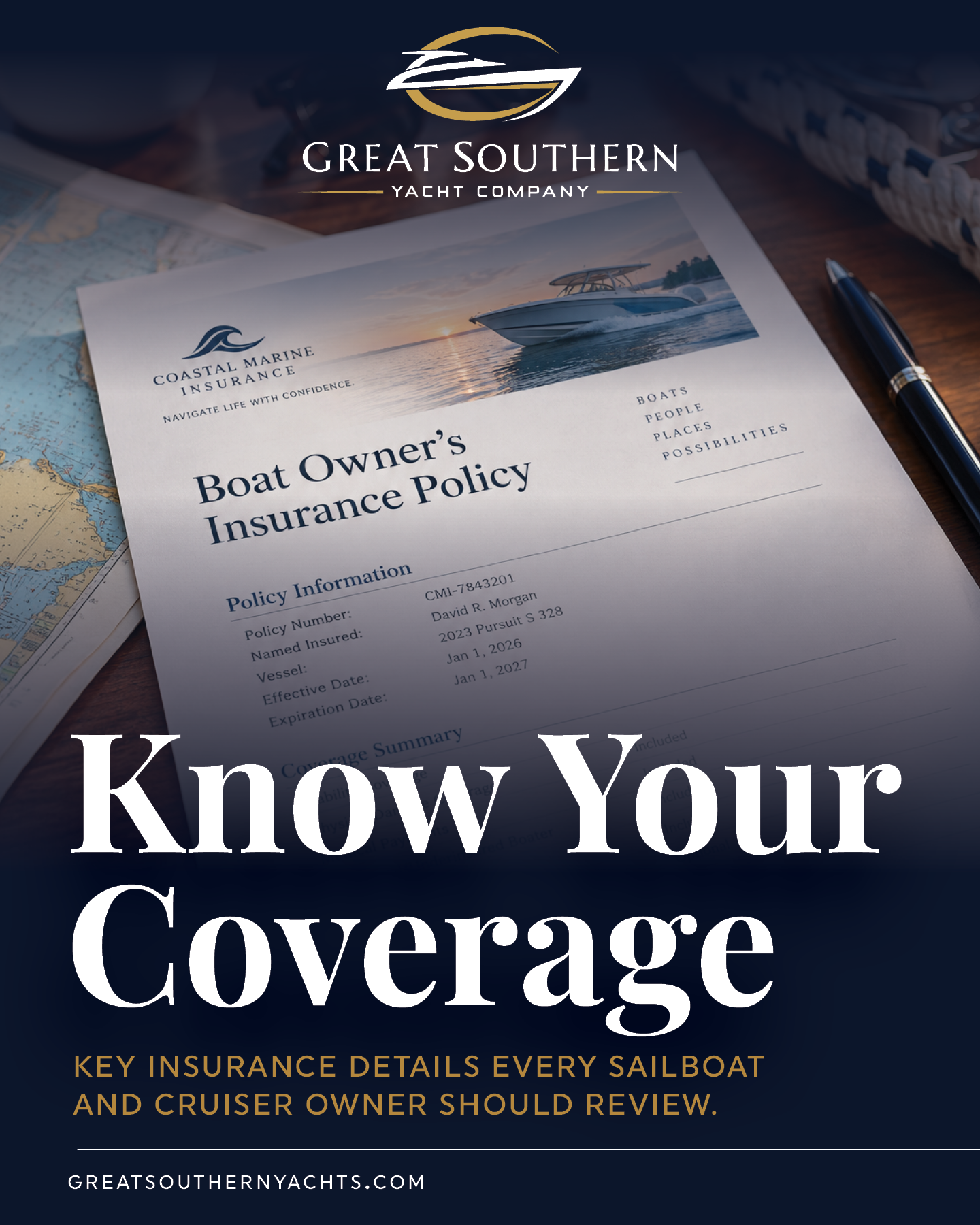
Develop a how-to checklist for sailboat and cruiser owners covering policy territory limits, named hurricane plans, and lay‑up warranties, with an at-a-glance Red Flags in Your Policy sidebar
A Practical Insurance Checklist for Sailboat & Cruiser Owners
Insuring a sailboat or cruiser is more than choosing a premium and deductible. The fine print around territory limits, named hurricane plans, and lay-up warranties can determine whether a claim is paid or denied—especially in Florida and Gulf Coast waters.
Use this checklist as a working guide when reviewing your policy or planning a new purchase in areas like Destin, 30A, Miramar Beach, South Florida, or anywhere you cruise nationwide.
1. Understand Your Policy Territory Limits
Most yacht and boat policies define exactly where you’re covered. For coastal and offshore cruising, this may change seasonally or require prior approval.
Checklist: Territory Limits
1. Locate the “Navigation Area” section.
-
Confirm your policy clearly states:
- Coastal range (e.g., “inshore and coastal waters of Florida and Alabama”)
- Offshore limits (e.g., “up to 100 nm offshore”)
- Inland waters or lake restrictions
- If you cruise from the Emerald Coast to South Florida or beyond, verify your entire route is included.
2. Identify seasonal or “hurricane box” restrictions.
-
Note any:
- Date‑based restrictions (e.g., no coverage south of a certain latitude during hurricane season)
- Seasonal endorsements that limit Caribbean, Bahamas, or Keys cruising
- Requirements to relocate north or haul out by certain dates
3. Confirm coverage for delivery trips.
-
If you plan:
- A Gulf Coast–to–South Florida delivery
- A cross‑country transport by truck
- A professional delivery captain run
- Make sure the entire route and method (over water or over land) is specifically covered or endorsed.
4. Ask what happens if you “step outside” the territory.
-
Clarify with your agent:
- Are you completely uninsured outside the territory?
- Is there a reduced coverage scenario?
- Can temporary extensions be issued for a specific trip?
5. Keep proof of compliance.
-
Save:
- GPS tracks or logbooks for long passages
- Transport contracts for over‑road moves
- Written endorsements changing navigation areas
These details matter when a loss occurs near a boundary, during a delivery, or just outside your standard cruising area.
2. Named Hurricane Plans: Your Policy’s Storm Playbook
Many yacht policies in Florida and the Gulf require a “named storm plan” or “hurricane plan” as a condition of coverage. This is especially relevant for sailboat and cruiser owners who keep vessels in marinas, on moorings, or at private docks.
Checklist: Named Hurricane Plan
1. Find the named storm or hurricane warranty.
-
Look for:
- “Named Windstorm Warranty”
- “Named Storm Plan”
- “Storm Preparation Requirement”
2. Understand your exact obligations when a storm is forecast. Typical requirements may include:
- Haul‑out at a designated yard when a watch or warning is issued
- Securing the boat in a specific type of slip or hurricane-rated berth
- Moving to a particular “hurricane hole” or inland location
- Removing sails, canvas, and loose gear
- Doubling up lines and adding chafe gear
3. Know your haul-out and storage options in advance.
-
Confirm:
- Which yards or marinas can actually haul your vessel size and draft
- Whether you have a reserved hurricane haul-out agreement
- Timeframes needed to secure a haul-out slot when a storm approaches
4. Ask about haul-out reimbursement.
-
Many policies offer:
- Partial or full reimbursement of haul-out costs when a named storm threatens
- Specific distance or category triggers (e.g., storm track within X miles)
- Understand how to claim this benefit and what documentation is required.
5. Document your hurricane preparation. In a claim situation, you may need to demonstrate reasonable care. Keep:
- Dated marina invoices or haul-out work orders
- Photos of storm prep (lines, fenders, stripped canvas)
- Emails with your marina or captain showing your evacuation or securing plan
3. Lay-Up Warranties: When Your Boat Is “Out of Commission”
Many policies provide a premium discount in exchange for a “lay-up warranty”—a period when the vessel is not in use and is stored in a specified manner.
Checklist: Lay-Up & Storage Terms
1. Identify if your policy has a lay-up period.
-
Check:
- Dates when the boat must be laid up (e.g., December 1 – March 31)
- Whether lay-up is “ashore,” “afloat but not in use,” or both
2. Confirm what “not in use” means.
-
Clarify:
- Are short day trips allowed during lay-up?
- Are you covered for sea trials, repositioning, or maintenance runs?
- Do you need written permission to move the vessel?
3. Verify the specified storage method and location.
-
Does your policy require:
- Dry storage, blocked and supported ashore
- A particular marina, region, or type of dock
- Minimum security measures (gated yard, locked dock, etc.)
4. Understand coverage for yard periods and refits. For sailboats and cruisers undergoing upgrades:
-
Confirm:
- Coverage during haul-out, stands/blocking, and yard work
- Who is responsible for damage during yard operations (you vs. yard’s insurance)
- Any exclusions for certain types of work or modifications
5. Align your real-world practices with the policy.
- If you use your “winter” or “off-season” months for cruising in Florida, make sure your policy doesn’t assume you’re laid up.
- Adjust your lay-up dates or remove the warranty if your usage patterns change.
Red Flags in Your Policy (At-a-Glance Sidebar)
- Vague or missing navigation area language
- Territory that excludes your regular cruising grounds (e.g., Bahamas, Keys, Gulf crossings)
- Strict named storm requirements that are unrealistic for your marina or vessel size
- No clear haul-out reimbursement terms despite storm prep requirements
- Lay-up dates that conflict with when you actually use the boat
- Lay-up language that prohibits even short repositioning or maintenance runs
- Exclusions for delivery voyages, professional captains, or over-road transport
- “Warranted private pleasure only” with unclear guidance on charters, instruction, or corporate use
- Any clause that says “warranty” without you fully understanding its conditions and consequences
If any of these appear and don’t match how and where you actually boat, it’s time for a conversation with a knowledgeable advisor.
How a Fiduciary-Focused Yacht Broker Can Help
While an insurance agent structures coverage, an experienced yacht broker who understands real-world cruising and hurricane realities can help you:
- Match your policy’s navigation area to your actual cruising plans
- Sanity-check hurricane plans against the realities of Emerald Coast and South Florida marinas
- Coordinate haul-out, transport, and marina placement with an eye toward policy compliance
- Plan delivery routes and seasonal moves that stay inside your coverage territory
At Great Southern Yacht Company, we routinely help clients think through these details when buying or selling a sailboat or cruiser, so their insurance, logistics, and ownership plans align from day one.
If you’re considering buying or selling a sailboat or cruiser and want a clear, practical review of how insurance, territory, and hurricane planning fit into your ownership strategy, contact Great Southern Yacht Company for private yacht consulting grounded in experience and fiduciary guidance.