

Yacht
Brokerage
Refined
Strategic guidance for buyers and sellers who expect more.
View All Listings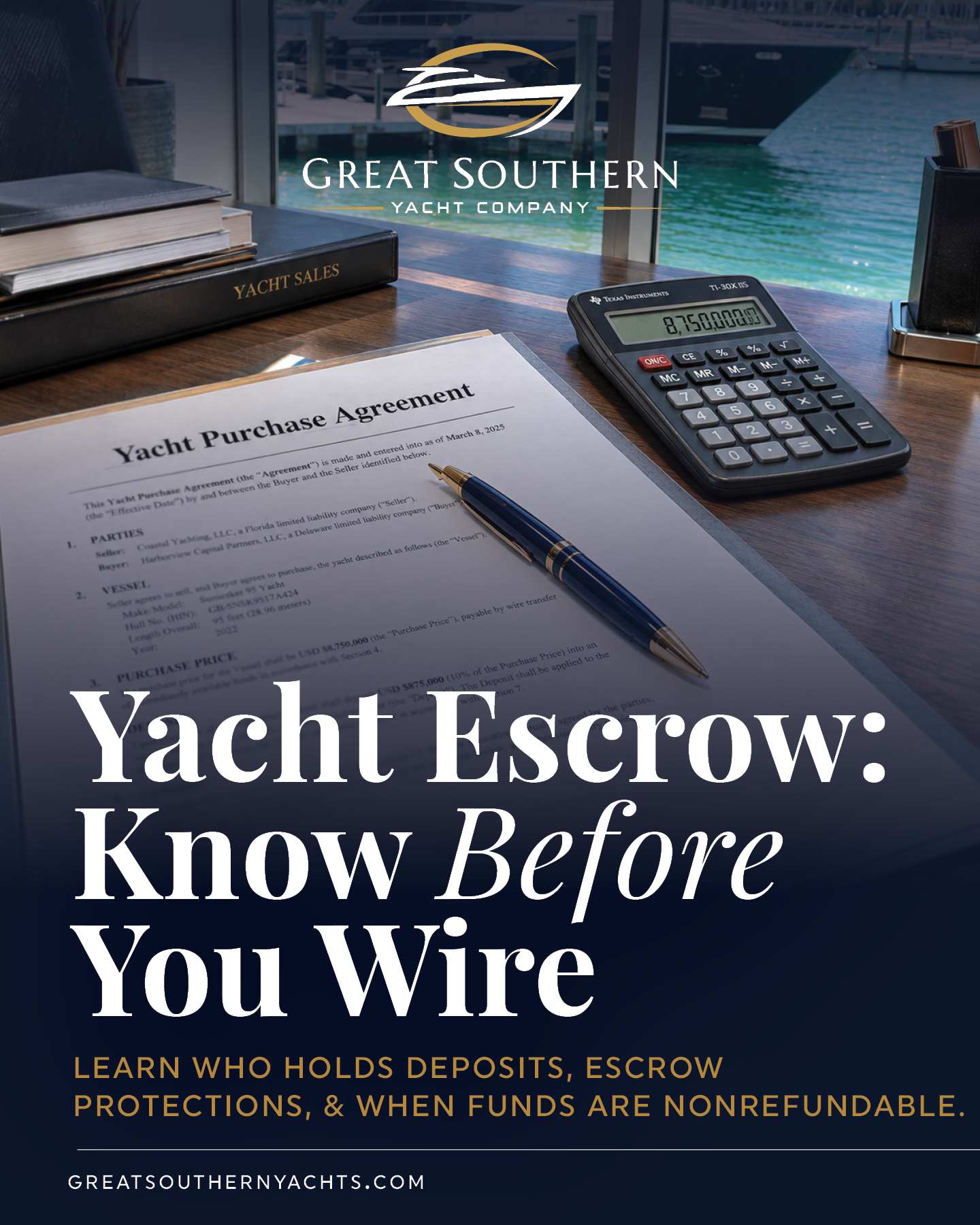
What to Check Before Wiring a Yacht Deposit
A yacht deposit may be due soon after an offer is accepted, before a surveyor has inspected the vessel. That timing can feel uncomfortable, especially with a seller waiting and your bank’s wire cutoff approaching. Before sending funds, confirm how the deposit will be held and what the contract says about getting it back.
Know who will hold the deposit
The purchase agreement or associated escrow documents should identify the escrow holder. Funds may be held in a yacht brokerage’s escrow account or by another designated escrow agent, such as an attorney. Confirm the arrangement rather than assuming your broker or the listing broker has that role.
Check the holder’s legal name and verify that the receiving account is designated for escrow or trust funds, separate from operating money. The holder’s authority to release your deposit comes from the governing agreement and applicable law, not an informal request from either party.
Read escrow instructions alongside the contract
Escrow instructions provide written directions for holding and disbursing funds. Read them together with the signed purchase agreement. The deposit amount and payment deadline should be consistent, and any conflicting instructions deserve clarification before the wire goes out.
Look closely at what satisfies the funding deadline. The agreement may require the escrow holder to receive funds by a specified time. Initiating a wire shortly before that time could leave you late if the bank processes it afterward.
Also confirm what authorizes release to the seller or return to you. A valid refund right and the actual disbursement can involve separate steps, including required notices or signed release documents. If the parties dispute entitlement to the deposit, the holder may have to retain it while the dispute is resolved through the applicable process.
Identify when your refund rights change
The phrase “non-refundable deposit” is too broad to explain most purchase agreements on its own. Look for the specific events that change your cancellation rights and expose the deposit to possible forfeiture.
A contract may allow you to reject the yacht following survey and sea trial, provided notice reaches the required recipient in the proper form before the deadline. Financing or other contingencies may provide additional cancellation rights. Those protections apply only when they are included in your agreement and their conditions are met.
Written acceptance of the vessel or expiration of a rejection period may end an inspection-based right to cancel and recover the deposit. A later buyer default can then put the money at risk under the contract. Any surviving contingencies and seller-default provisions still matter; acceptance alone may not answer every refund question.
Suppose your agreement allows rejection following survey and sea trial until Friday at 5 p.m. If the survey is delayed, that deadline may arrive before you have the report. Request an extension early and have it agreed in writing as the contract requires before the original deadline expires. Rescheduling the inspection by itself leaves the contractual deadline unresolved.
As part of buyer representation at Great Southern Yacht Company, we help coordinate surveys and sea trials around the agreement’s deadlines. That coordination gives the inspection process room to inform your decision before the relevant cancellation window closes.
Have unclear forfeiture or dispute language reviewed by a maritime attorney before signing. A clear answer at the offer stage is more useful than an argument after funds are committed.
Verify the wire without rushing
Wire fraud can reach buyers through convincing emails, including compromised email threads. Treat payment verification as a separate step from negotiating the purchase, even when the request appears to come from someone you know.
Before authorizing the transfer:
- Call the escrow holder using a previously verified or independently established phone number, rather than one supplied only in the wire email.
- Read back the beneficiary name and account details to an authorized person. Resolve any mismatch before sending money.
- Pause if payment instructions change unexpectedly. Verify the change through the same independent channel, especially if the message pressures you to act immediately.
- Keep your bank’s transfer confirmation and obtain confirmation of receipt directly from the escrow holder.
Start this process ahead of the bank’s cutoff. If processing time threatens the contractual deadline, tell your broker promptly so any required extension can be pursued before time runs out. Never rely on an unconfirmed assumption that a late deposit will be acceptable.
Talk with us before you make an offer. We can walk you through standard yacht deposit practices and the escrow questions to settle before you wire.